
www.usa-automation.net
20
'26
Written on Modified on
Why autonomous logistics will define the next era of global power
Logic Robotics outlines how AI-driven supply chains will shape future commerce, defense operations, and off-world expansion.
logic-os.com
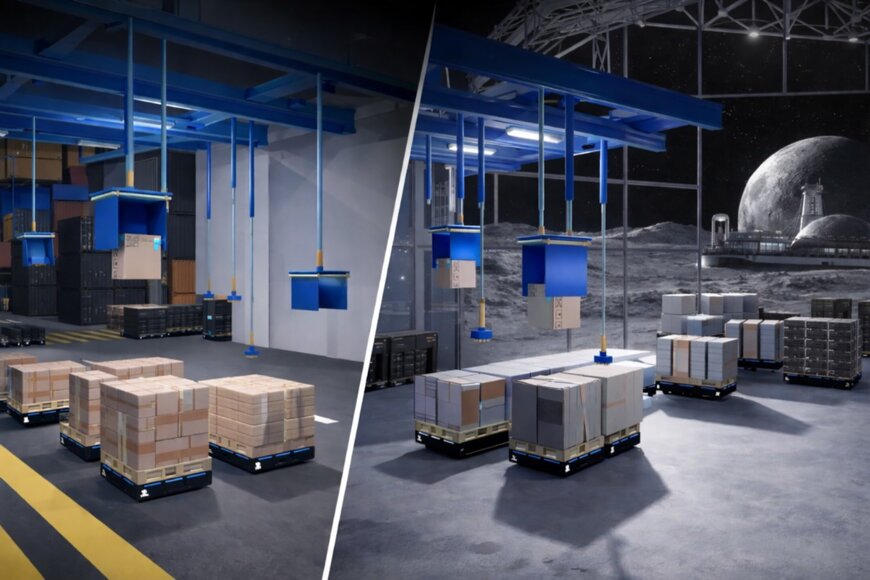
Logic highlights a shift in global competition—from space exploration to the infrastructure that enables scalable, repeatable operations beyond Earth.
According to industry leaders, the next phase of economic and geopolitical influence will be determined by the ability to build autonomous logistics systems that connect Earth, orbit, and future off-world environments.
Autonomous supply chains as strategic infrastructure
Modern logistics is evolving into a fully integrated, AI-driven system combining robotics, digital platforms, and autonomous transport.
These systems aim to:
- Coordinate movement across warehouses, ports, and vehicles
- Enable real-time decision-making without human intervention
- Scale across terrestrial and space-based environments
The objective is to create a unified logistics architecture capable of supporting both commercial and defense operations.
Global competition and industrial scale
The article emphasizes that global competition is intensifying, particularly with rapid advancements in manufacturing, robotics, and AI-driven systems.
The ability to move from innovation to large-scale deployment is identified as a critical factor. Nations that establish logistics standards early may influence global infrastructure for decades, similar to historical examples such as shipping containers and rail systems.
Foundation for off-world operations
Autonomous logistics is presented as a prerequisite for future space infrastructure, including:
Global competition and industrial scale
The article emphasizes that global competition is intensifying, particularly with rapid advancements in manufacturing, robotics, and AI-driven systems.
The ability to move from innovation to large-scale deployment is identified as a critical factor. Nations that establish logistics standards early may influence global infrastructure for decades, similar to historical examples such as shipping containers and rail systems.
Foundation for off-world operations
Autonomous logistics is presented as a prerequisite for future space infrastructure, including:
- Lunar bases and orbital stations
- Autonomous resource transport
- Interplanetary supply chains
Such operations require systems capable of functioning without direct human control, relying on AI-driven coordination and remote observability.
Role of digital twins and system visibility
Digital twin technologies are identified as a key enabler, providing real-time monitoring and control of assets across the supply chain.
These systems support:
Role of digital twins and system visibility
Digital twin technologies are identified as a key enabler, providing real-time monitoring and control of assets across the supply chain.
These systems support:
- Continuous visibility of operations
- Predictive maintenance and fault detection
- Remote management of facilities and vehicles
In space environments, where human presence is limited, such capabilities are essential for safe and reliable operations.
Integration across logistics domains
Future logistics platforms are expected to unify multiple transport modes and operational layers into a single system. This includes:
Integration across logistics domains
Future logistics platforms are expected to unify multiple transport modes and operational layers into a single system. This includes:
- Ground vehicles and warehouses
- Autonomous drones and robotics
- Orbital and space-based transport systems
A unified platform approach enables seamless coordination across all stages of the supply chain.

Importance of standardisation
The development of standardised logistics systems is highlighted as a key factor in long-term success. Once established, standards influence infrastructure design, operational processes, and global adoption.
Historical precedents demonstrate how early standardisation can shape industries for decades.
Public-private collaboration
The article underscores the importance of collaboration between industry and government to accelerate deployment of autonomous systems.
Key priorities include:
Importance of standardisation
The development of standardised logistics systems is highlighted as a key factor in long-term success. Once established, standards influence infrastructure design, operational processes, and global adoption.
Historical precedents demonstrate how early standardisation can shape industries for decades.
Public-private collaboration
The article underscores the importance of collaboration between industry and government to accelerate deployment of autonomous systems.
Key priorities include:
- Scaling pilot projects across ports, military bases, and industrial sites
- Reducing barriers to deployment
- Aligning commercial innovation with defense requirements
This approach supports faster transition from prototype to operational systems.
Industry outlook
Autonomous logistics is emerging as a foundational technology for future industrial and space ecosystems. As supply chains become more complex and globally integrated, the ability to automate and unify operations will be critical.
The development of scalable, AI-driven logistics platforms is expected to play a central role in shaping economic competitiveness and technological leadership.
Edited by an industrial journalist, Lekshman Ramdas, with AI assistance.
www.logic-os.com
Industry outlook
Autonomous logistics is emerging as a foundational technology for future industrial and space ecosystems. As supply chains become more complex and globally integrated, the ability to automate and unify operations will be critical.
The development of scalable, AI-driven logistics platforms is expected to play a central role in shaping economic competitiveness and technological leadership.
Edited by an industrial journalist, Lekshman Ramdas, with AI assistance.
www.logic-os.com
