
www.usa-automation.net
07
'26
Written on Modified on
Silicon Labs Accelerates the Future of Connected Intelligence at CES 2026
From January 6-9, in Las Vegas, Silicon Labs introduces an enterprise-grade Zephyr SDK for IoT development, advancing connected embedded systems with scalable tools and wireless support.
www.silabs.com
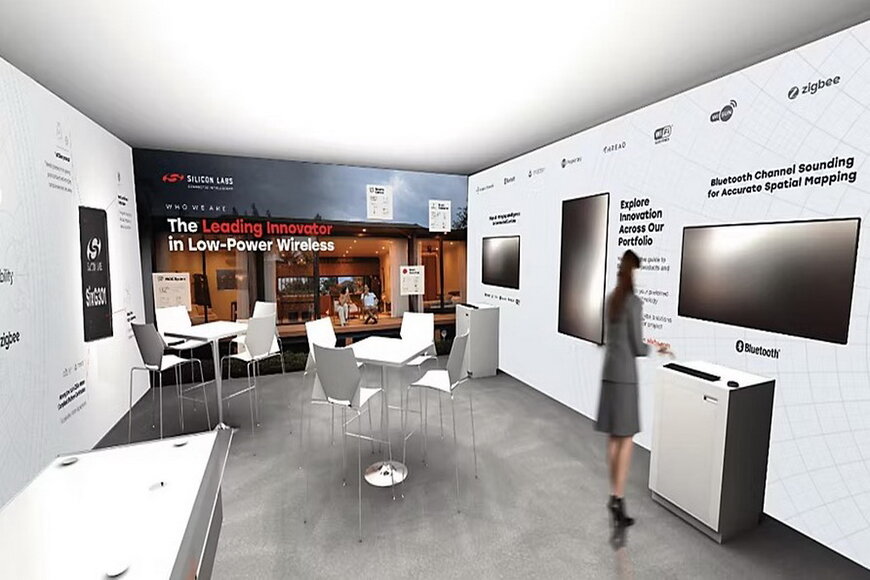
At CES 2026 in Las Vegas, Silicon Labs presented updates to its connectivity and embedded software portfolio that aim to accelerate implementation of scalable Internet of Things (IoT) and edge applications, with specific relevance to developers targeting energy-efficient wireless devices and digital supply chain ecosystems. The company’s announcements centered on software toolchain enhancements and industry ecosystem engagement for embedded devices across smart home, industrial IoT and related sectors.
Enterprise Support for Open Real-Time Operating Systems
A core element of Silicon Labs’ presentation was the general availability of the new Simplicity SDK for Zephyr, an optimized software development kit (SDK) for the Zephyr real-time operating system (RTOS), a widely adopted open-source kernel for embedded connected systems. The SDK offers a Silicon Labs–maintained snapshot of the Zephyr codebase subject to internal quality assurance processes, with access to full support channels. Initial wireless protocol support at launch includes Bluetooth Low Energy (LE) across key Silicon Labs system-on-chips (SoCs) and combined Wi-Fi plus Bluetooth on select devices.
This positioning addresses common technical challenges in large-scale IoT deployments—such as long-term security, performance predictability and regulatory compliance—by offering an enterprise-oriented distribution of Zephyr that reduces integration friction for manufacturers and engineering teams. Existing Zephyr applications can migrate to Silicon Labs platforms with minimal firmware changes, which can accelerate integration time and preserve application portability across hardware.
Demonstrations and Ecosystem Participation
At the event, Silicon Labs also showcased demonstrations of advanced wireless capabilities, including Bluetooth channel sounding and single-chip wireless motor control using AI/ML techniques, underscoring ongoing development in precise RF analysis and integrated machine learning workloads for connected endpoints. Technical staff participated in sessions hosted by ecosystem organizations such as the Z-Wave Alliance, Thread Group and Tuya Smart, reflecting sustained involvement in standards and interoperability frameworks relevant to smart devices. Partners including Amazon Web Services (AWS), Powercast and AIZIP featured Silicon Labs technology in their CES exhibits, indicating integration of its connectivity solutions in a range of third-party systems.
Context in Embedded Connectivity and Digital Supply Chain Software
The introduction of the Simplicity SDK for Zephyr occurs against a backdrop of increasing reliance on open RTOS platforms within the digital supply chain and embedded device ecosystem. Zephyr’s portability and production-grade design make it a common choice for constrained devices that require deterministic behaviour and broad protocol support. By adding QA-backed distributions and comprehensive support, Silicon Labs seeks to lower barriers for adopting Zephyr in commercial products where lifecycle stability and interoperability are priorities.
Technical use cases for the updated SDK include battery-powered sensors in smart building infrastructure, industrial controllers requiring secure wireless connectivity, and consumer smart home devices leveraging multiprotocol stacks. The combination of development tools, standardized RTOS foundations and broad wireless support addresses a spectrum of engineer requirements from rapid prototyping to deployed field systems.
Standards and Industry Implications
While there are multiple RTOS options available in the market, Zephyr’s acceptance in embedded systems and backing by an industry consortium make it a relevant benchmark for scalable IoT software development. Silicon Labs’ enterprise SDK differentiates itself by coupling open-source flexibility with vendor-level quality assurance and support—features that can be particularly relevant for regulated environments or long-lifecycle products where predictable updates and security maintenance are important.
Overall, the updates at CES 2026 position Silicon Labs to support developers building across the breadth of connected device applications, from constrained edge nodes to more complex smart systems, while addressing interoperability and lifecycle concerns inherent in modern IoT and automotive data ecosystem architectures.
www.silabs.com
