
www.usa-automation.net
26
'26
Written on Modified on
Solid-State Short-Range Lidar Integrates Onboard Edge AI Perception
MicroVision introduces a solid-state perception system integrating point-cloud processing directly onto the device to streamline autonomous navigation and industrial automation infrastructure.
microvision.com
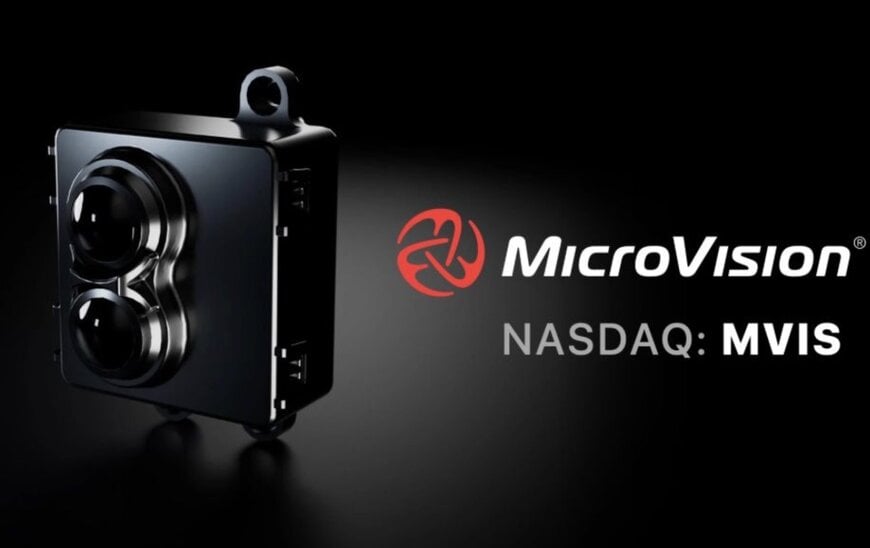
MicroVision has commenced commercial production of its MOVIA Pro short-range lidar sensor, delivering a combined sensing and onboard perception hardware platform. The technology targets developers integrating localized processing into unmanned aerial platforms, intelligent infrastructure, and automated robotics.
Transitioning to Solid-State Architecture and Onboard Edge Computing
The lidar market is increasingly shifting toward solid-state architectures to reduce moving parts and decrease manufacturing costs. The MOVIA Pro diverges from conventional lidar systems by processing point-cloud data internally through an integrated, Linux-based Open Software Framework. By executing perception software at the edge directly on the device, the sensor generates object-level information without relying on secondary external computing modules. This consolidated architecture significantly reduces system complexity, lowering the required cabling and external hardware overhead necessary to integrate autonomous applications.
Multi-Echo Sensor Processing and Industrial Network Connectivity
To ensure accurate environmental mapping in challenging conditions, the device utilizes multi-echo sensing. This mechanism captures multiple returns from a single emitted light pulse, allowing the sensor to filter out noise like dust or precipitation and accurately identify solid targets.
"With MOVIA Pro, we've combined high-performance sensing with onboard computing, an open software framework and industrial-ready connectivity," stated MicroVision CEO Glen DeVos. "This is one device that can sense, perceive, and act, providing customers with a more integrated and adaptable solution."
For integration into existing control architectures, the device supports standard controller area network (CAN) protocols alongside Gigabit and 100Mbit Ethernet. It also utilizes industrial-ready I/O connectors, facilitating straightforward deployment across automated guided vehicles (AGVs) and traffic management control systems. As a software-defined component, the system is designed to accommodate ongoing perception algorithm updates over time.
Application Integration Across Autonomous Environments
The hardware, manufactured at an Orlando-based facility, is configured to support both immediate operational bottlenecks and advanced automation objectives across multiple sectors.
In warehouse and industrial automation, the system provides continuous near-field coverage for autonomous mobile robots (AMRs) and forklift advanced driver-assistance systems. This short-range obstacle detection is critical for maintaining safety in dynamic environments where machinery and personnel operate in close proximity, actively supporting a highly automated digital supply chain.
For intelligent transportation and smart infrastructure, the high-resolution field of view supports automated traffic enforcement and intersection monitoring within the broader automotive data ecosystem. Because the device natively processes point-cloud data into actionable outputs, it can provide anonymized spatial data to ensure compliance with privacy considerations in public surveillance. Additionally, the sensor supports unmanned aerial systems, off-road defense operations, and marine vessels requiring compact hardware for environmental perception and autonomous navigation.
Additional Context
This section details technical specifications and competitive benchmarking not included in the original news release.
The short-range industrial and autonomous lidar market comprises both mechanical spinning and solid-state sensors. Competing solutions in the short-range category include the Ouster OS0 and the Hesai QT128. The Hesai QT128 offers a 105° vertical field of view with an operational range of up to 50 meters, while the Ouster OS0 utilizes a 90° vertical field of view and spans a comparable 35- to 50-meter range. While these legacy sensors focus primarily on high-resolution raw point-cloud generation requiring external electronic control units (ECUs) for interpretation, the MOVIA architecture differentiates itself through its pure solid-state design and native processing. By housing the perception software natively within the sensor structure, the technology fundamentally shifts computational requirements away from external processing nodes, resulting in a leaner hardware profile tailored for edge AI constraints.
Edited by Aishwarya Mambet, Induportals Editor, with AI assistance.
www.microvision.com
